But then there is Rule of Cool. sure a giant drill on a car doesn’t make much sense or incredibly useful but it I would imagine it be rather cool to use a giant drill on a car to smash through stuff.
[size=8pt]I’ve got to stop linking TVtropes.[/size][/quote]
To each his own, i guess
Why don’t you just rename a blade part (the one that looks like | )to HUGE DRILL, attach it to the front ( or in your case the roof :DD maybe) and play happily ever after
Sorry Babes but I’m dumping you over a internet forum, a real dick move I know I am worse than Hitler for this.
[quote=“Ferodaktyl, post:22, topic:1056”]To each his own, i guess
Why don’t you just rename a blade part (the one that looks like | )to HUGE DRILL, attach it to the front ( or in your case the roof :DD maybe) and play happily ever after
                  |
                |H|
               |-H-|
            O====O
@[/quote]
To be honest looks more like a Cata:DDA character with a giant wizard hat on than a car with a improvised blade based drill.
I see I cannot fool you. You are much too keen. It is indeed a giant wizard hat, BUT ONE WITH AN IMPROVISED BLADE BASED DRILL ON IT !!!. I was hoping to disguise my secret wish for such an awesome item by making it look like a mere giant drill car, but i was caught.
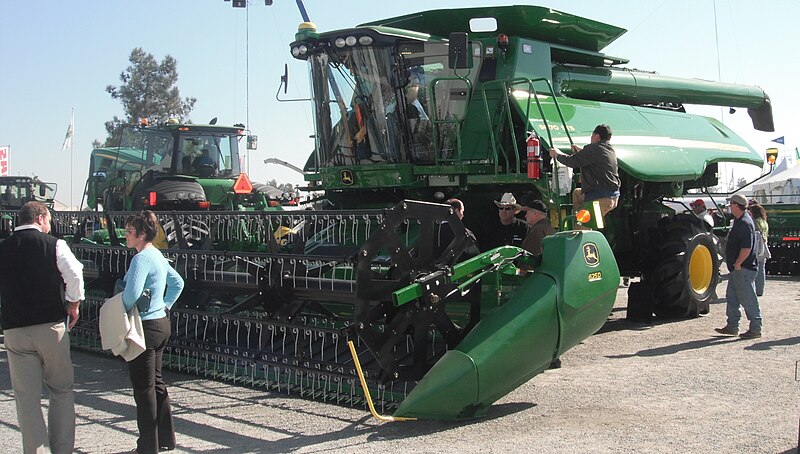
Dear devs, please introduce this AWESOME WIZARD DRILL HAT in version 0.5. And remove everything else. You might ask what is the use of such an extraordinary item. Well, of course, to drill through the mountains of meat harvested by the Combine Harvester.
Oh really? Okay an industrial drill will run on a moving car without any expense to its speed whatsoever. Im obviously wrong.[/quote]
You are obviously wrong, you just don’t know it because you don’t understand how engines and alternators work.
In a typical gasoline car engine, gasoline is combusted to drive pistons which generates mechanical energy. Larger engines can have more cylinders, or larger cylinders, or both. This is where all that V4, V6, V8 nomeclature comes in. Cylinder size is measured in liters. That’s the number before the engine.
So the engine can generate X mechanical energy. That mechanic energy is used to turn the wheels: what makes car go.
The leftover mechanical energy is used to spin a electromagnetic core. This generates electricity which is used to power the car’s electrical system. Even in the weakest engines this easily generates more than enough power to power the lights, door locks, air conditioning/heat, dashboard electrics, etc, and there’s enough leftover to charge the car’s battery. (Obviously when you start the car you need power in the battery, since the engine isn’t running yet.)
Thus, when you press on the gas, you get MORE SPEED -and- MORE ELECTRICITY.
Do you see where you went wrong there? You can’t draw so much electricity that it slows down the car. That’s impossible. The car is capable of producing Y electricity. If you need more your drill just won’t run, but you could actually generate more by going pressing the gas and going faster, not slowing down.
If we’re talking about something that could be a bionic (ie, the drill on a big daddy) or run off a UPS (which is basically a big battery), then there’s absolutely no question that it could EASILY run off of a typical large civilian car engine, like a semi-truck.
Giant drills are silly. =( Sorry, I said it. But it’s like something out of Thunderbirds. Even the actual giant ‘drilling’ machines we have in reality don’t actually use drills.
A plow add-on for vehicles could allow vehicles to knock down walls in buildings without leaving rubble behind that would pop the tires, though.
Giant drills are FUN! Imagine you drive through city with giant drill(s) and mounted flamethrowers (actually through houses are much more fun, but you may loose some loot), killing everything on your way and drinking rum (there are no water vehicles so in order to pretend that you are pirate you can only drink rum). It looks like carmageddon (if only you could install drills on your Eagle-5). Zombies, wrecked cars, ruined city and of course (mini)nuke (active) under your seat, it’s great way to die (only in zombie apocalypse setting, in real life there are no zombies, for now at least…). More fun could be only with lawnmowers installed on seagway, and driving in flip-flops, shorts, MASSIVE gold chain (with dead hedgehog tied to one side, while another is wrapped around your arm) and eyeglasses (some sort of Brute-Nerd style).
I guess you could go slow to drill through buildings…If you wanna be boring about it.[/quote]
Of course we want to be boring, if I wasn’t then it would be difficult to drill a hole.
Puns aside, but personally I think I agree with Hyena here. Plows I can see, but the only place I can see a giant drill popping up is maybe as a very rare thing outside of a mine or in a science lab. Should we chose to implement them however, I would also be of the mind that if you wanted to drill through something solid you would need to go very slowly since that’s how drills work (drilling through zombies, on the other hand, wouldn’t require you to slow down at all).
[quote=“Weyrling, post:31, topic:1056”]Driving into a horde of zombies with a spinning drill and splattering chunks of meat all across the street would be much Fun.
Though I do think a giant drill should only be slightly more effective than a giant spike when it comes to driving through buildings.[/quote]
Maybe causing more damage to the drill then the actual car maybe? Anyways this is turning into a discussion about realism. I think yes, maybe it was a tad stupid, but I was just laying there thinking. Anyways, combine harvester~Good, Bigdaddy arm bionic~Good? Drill~somewhat bad unless you want to drive through a couple of buildings and zombies without damaging your vehicle much. Anyways, im not making too much sense. Ima put a combine harvester and bigdaddy arm bionic topic up! See ya there
[quote=“Caconym, post:20, topic:1056”]But then there is Rule of Cool. sure a giant drill on a car doesn’t make much sense or incredibly useful but it I would imagine it be rather cool to use a giant drill on a car to smash through stuff.
[size=8pt]I’ve got to stop linking TVtropes.[/size][/quote]
There is merit in that idea, but we could always take the third option and take both of them. Just perhaps not giant mechanical drills on cars.
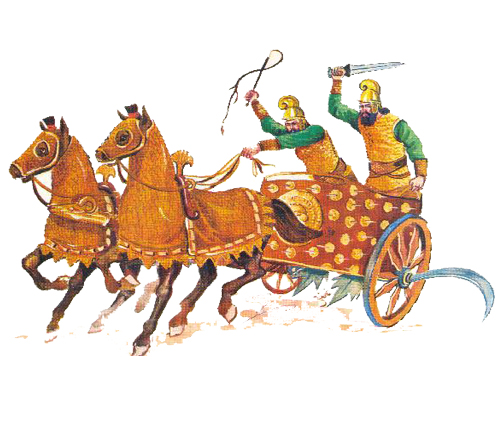
For example. Chariot scythes.
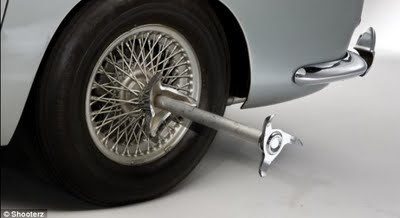
Or wheel weapons
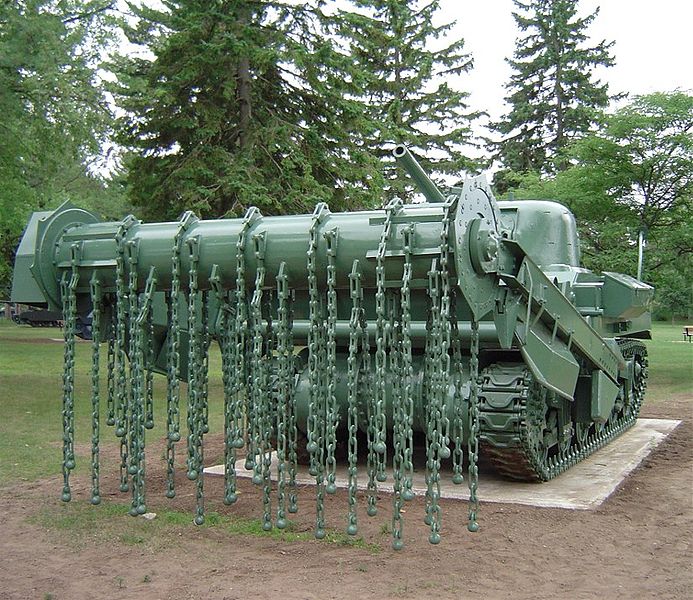
If you want some sort of mechanical weapon, there’s always that flail thing from WWII that was used for clearing a path through mine fields. Except you know, the length of chain wouldn’t go all the way down to the ground damaging itself on the pavement, instead the arc terminating off at torso and head height.